

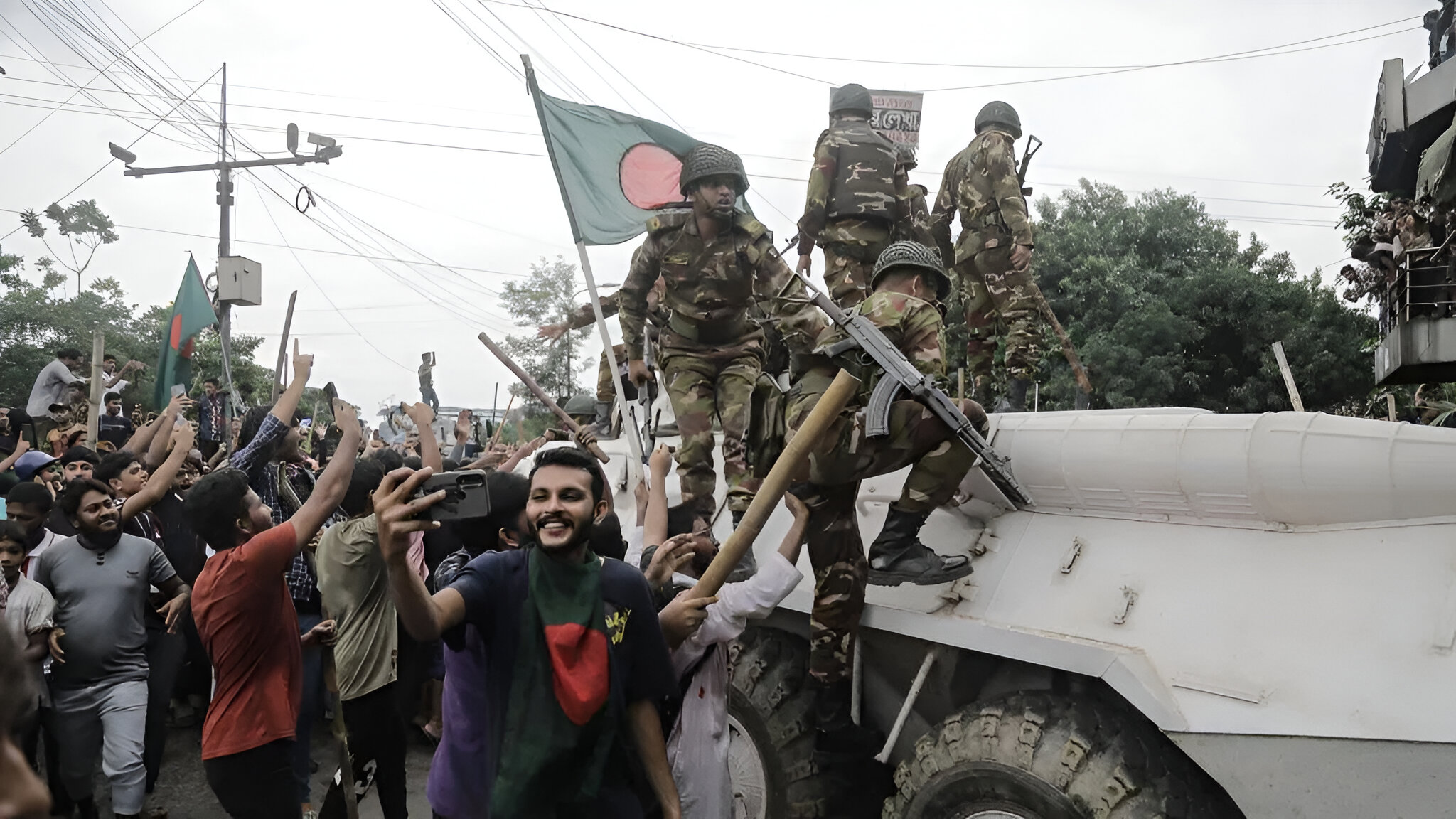
Since protests over a government job quota system erupted a month ago, almost 300 people have died. After the protests were violently suppressed by the government, a larger anti-government movement emerged.
The country's high unemployment rates, according to Dr. Chietigj Bajpaee, a senior research fellow at Chatham House, have made the quotas—which set aside a third of civil service positions for those descended from veterans of the nation's 1971 independence war with Pakistan—an especially contentious political issue.
"Public sector job quotas – with 400,000 new graduates competing for 3,000 civil service jobs – became a lightning rod for anti-government unrest," said Dr. Bajpaee.
He continued by saying that the rapidity of events was a reflection of Bangladeshi youth's dissatisfaction with the nation's "one-party rule" for the last 15 years.
"In a country with such a vibrant civil society, efforts to curb political freedoms and free speech were bound to trigger a blowback."
Following a Supreme Court decision last month, the government lowered the majority of the quota, but students persisted in their protests, calling for Ms. Hasina's resignation as well as justice for the dead and injured.
According to Mr. Bhattacharya, demonstrators now anticipate that the new government will carry out their requests, which include better employment opportunities, democratic reforms, and enhancements to the educational system.
Post a comment

0 comments